Case study·Mobile·Civic tech·Sep 2020 — Jan 2021
I researched and designed OpenUp, a community app giving Rotterdam neighbours a reason to meet — all of it under lockdown.
- My role
-
- Research and design over 20 weeks, with a five-person Digital Society School team
- Rebuilt the research approach when lockdown removed every in-person method
- Designed the avatar and strengths-matching that puts neighbours into groups
- Delivered with three Rotterdam neighbourhood partners
- Impact
-
- 15+ user tests, positive across the board
- Nominated for City Design 2020
- Aligned with four UN Sustainable Development Goals
A neighbourhood that needed a reason to come together.
Middelland is a diverse Rotterdam neighbourhood. Our brief, with the Digital Society School and three local partners, was to design a digital tool that could bring residents together inclusively and playfully — building resilience in the community. Success would be measured by how many residents signed up, joined groups and showed up to events.
Empathy first — lockdown made it harder.
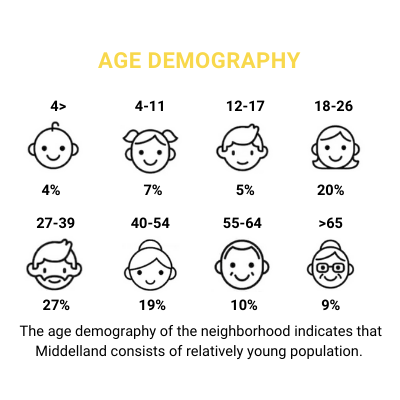
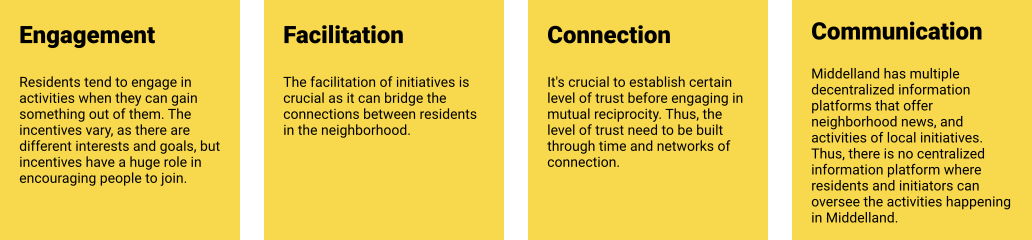
We interviewed initiative leaders and residents to understand the community's behaviours and pain points, then layered demographic research on top. Field access was constrained by the Netherlands lockdown — partner organisations bridged us to residents we couldn't otherwise have reached.
From insights to a shared brief.
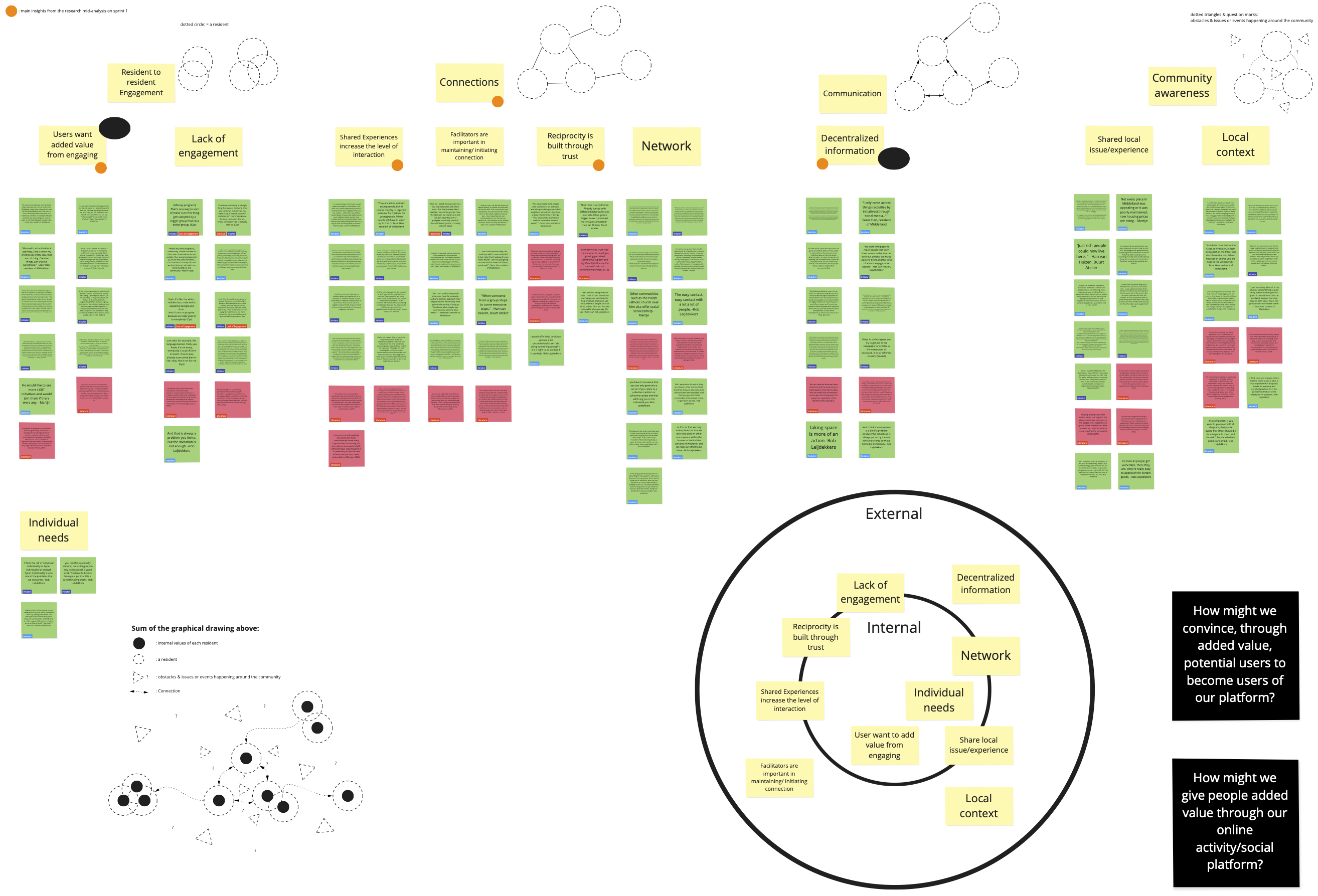
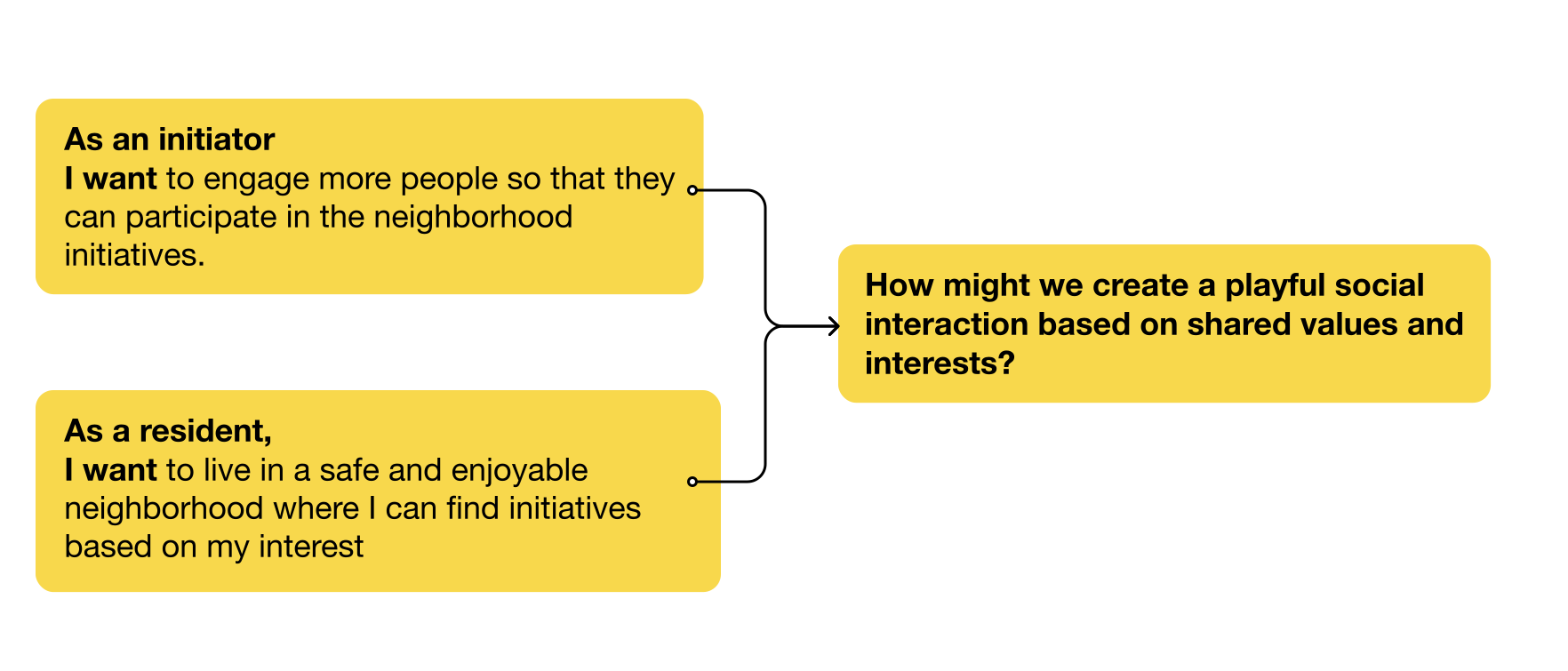
We used Jobs to Be Done and How Might We to turn the research into a problem statement the whole team — designers, researchers, coach, partners — could work against.
A community you can play your way into.
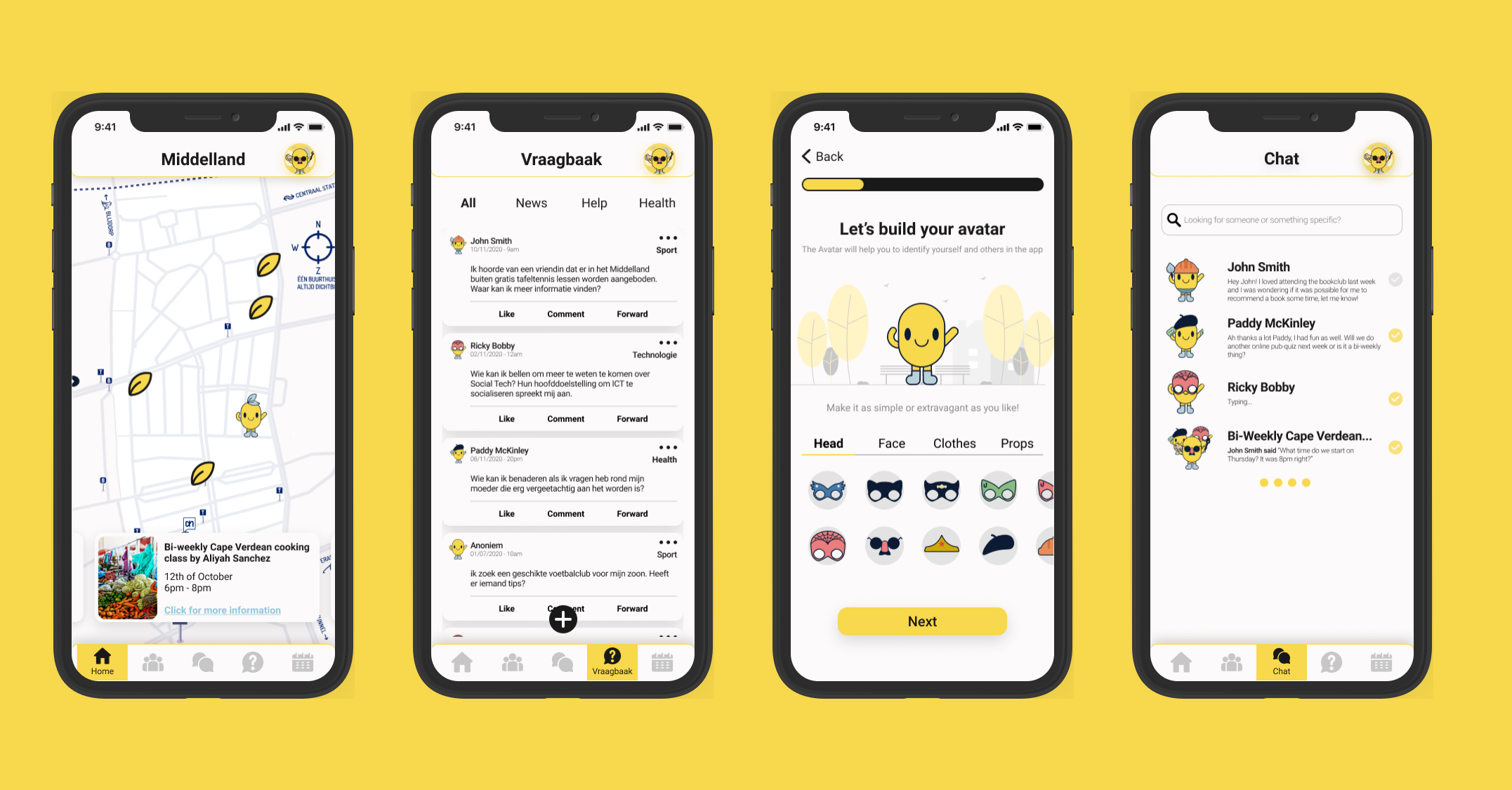
OpenUp is a playful digital tool to help you get to know your neighbours — a safe, virtual community where residents create an avatar, find their strengths, and connect with others. The application gives residents freedom to find activities, events and like-minded people nearby. Community building is a long-term process. OpenUp aims to kick-start it.
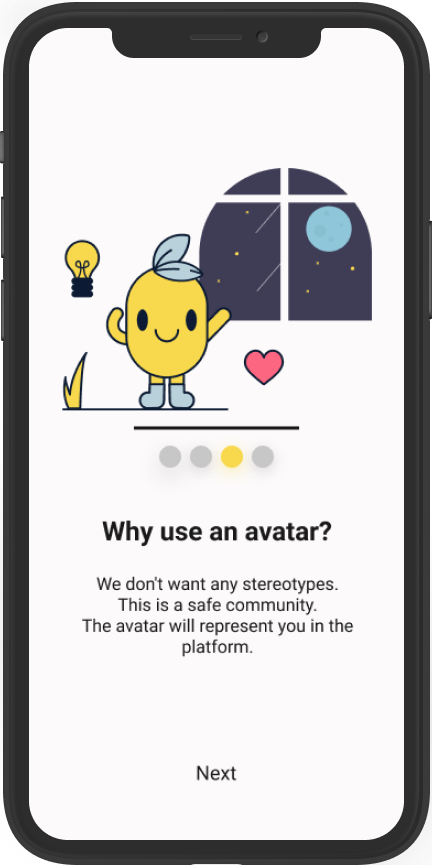
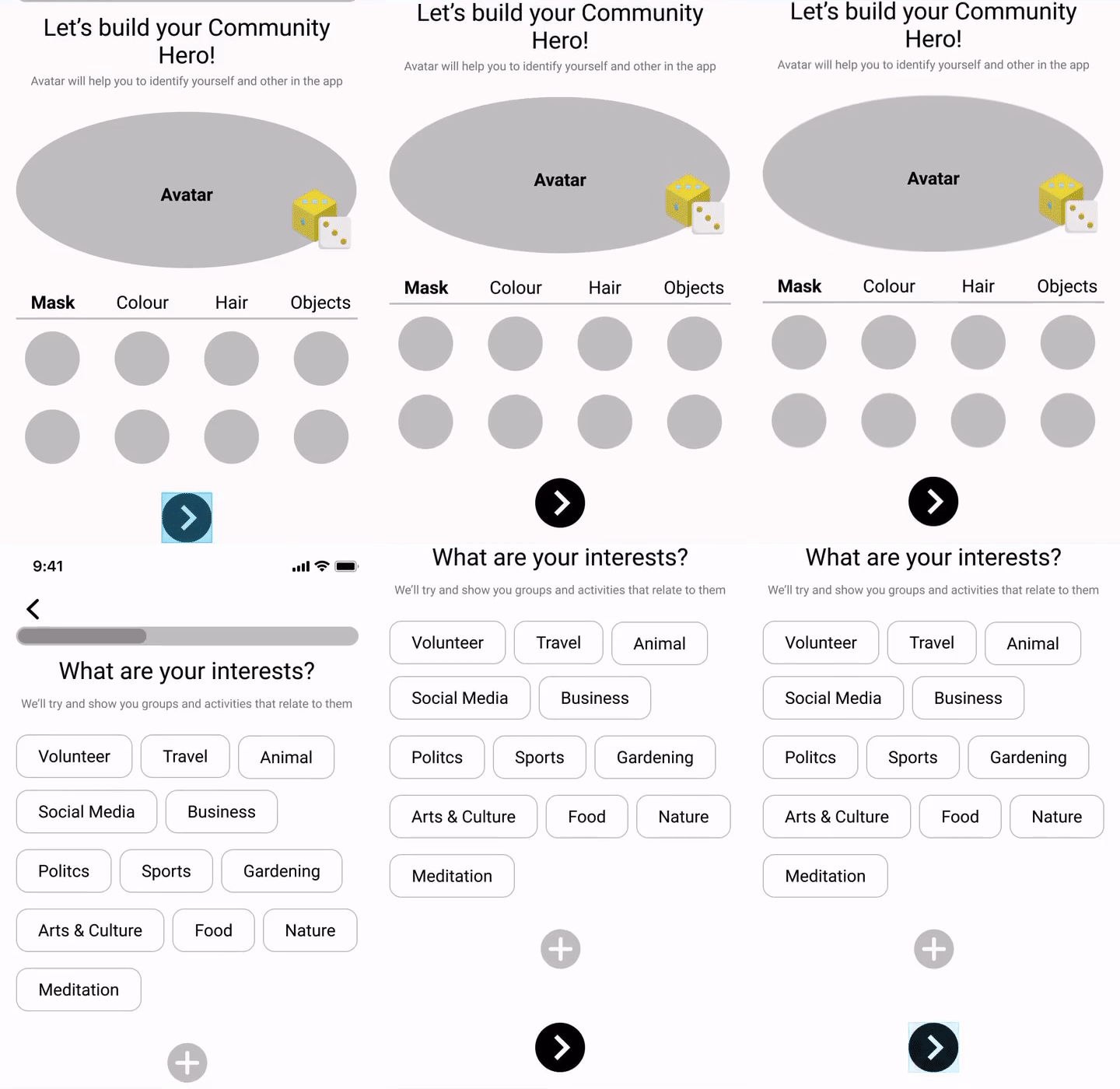
- Avatars — playful, customisable, and a safe alternative to a real-life picture for users worried about discrimination.
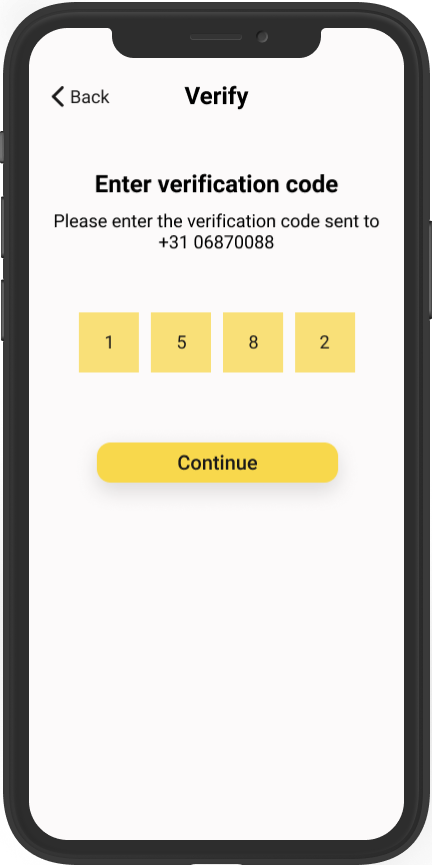
- Verification by postcode and phone — keeps the community to actual residents and gives each neighbourhood its own location-specific features.
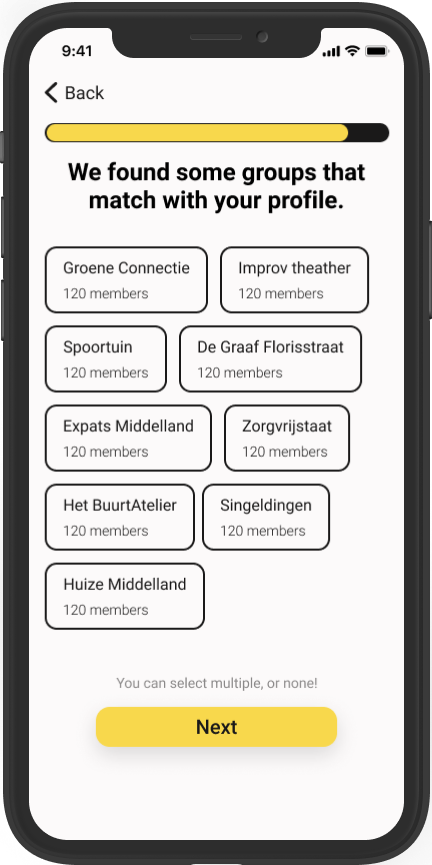
- Group Finder — connects residents with shared values and interests, surfacing where each person's skills are useful.
- Information Support — a map of activities and a Vraagbak collaboration for residents needing neighbourhood support.
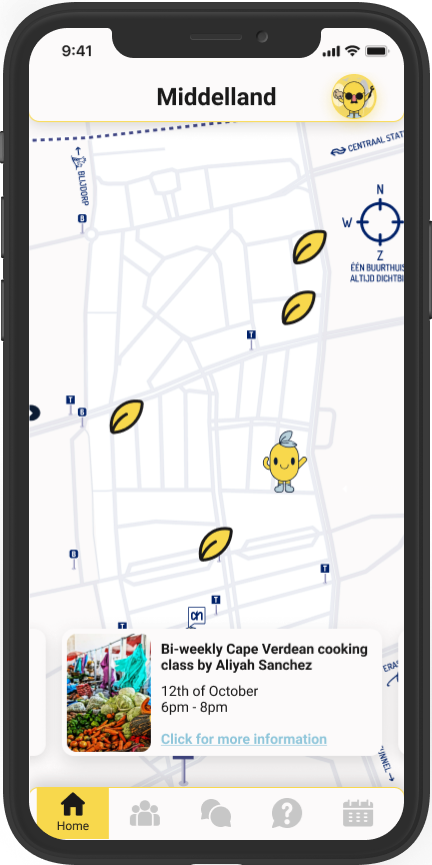
15+ user tests, positive across the board.
We ran more than 15 user tests with residents before handing the prototype over to the client. The feedback was strongly positive — testers enjoyed making avatars and discovered events and activities they hadn't known about. The team flagged a follow-up improvement: users wanted a better content overview before deciding to join. That insight went to the client to feed the next iteration.
Civic design in the middle of a pandemic.
Playfulness lowers the threshold. Avatars, illustration and a deliberately friendly tone made it easier for residents to engage with a community-building app — particularly users worried about how a real photo might be received.
Local partners are the research. Without the local partner organisations bridging us to residents, lockdown would have flattened the field work entirely. The collaboration shaped the product as much as the brief did.
Storytelling beats screens early on. Our first wireframe tests revealed that users couldn't understand the avatar concept from UI alone — we had to rewrite onboarding, clarify copy, and bring in illustration before the design read the way we'd intended.
Next case study